The payment methods for groceries and goods are undergoing a remarkable transformation, with leading retailers like Walmart at the forefront of this evolving checkout landscape. This shift impacts customer convenience, employee roles, and the ongoing battle against retail theft.
Nationwide, shoppers are starting to notice shifts at the front of the store, where self-checkout lanes—once praised for their speed and autonomy—are now being scrutinized more closely than ever before.
At certain Walmart locations, customers have seen the familiar kiosks disappear entirely. Specifically, stores in Shrewsbury, Missouri, and Cleveland have removed these self-service machines.
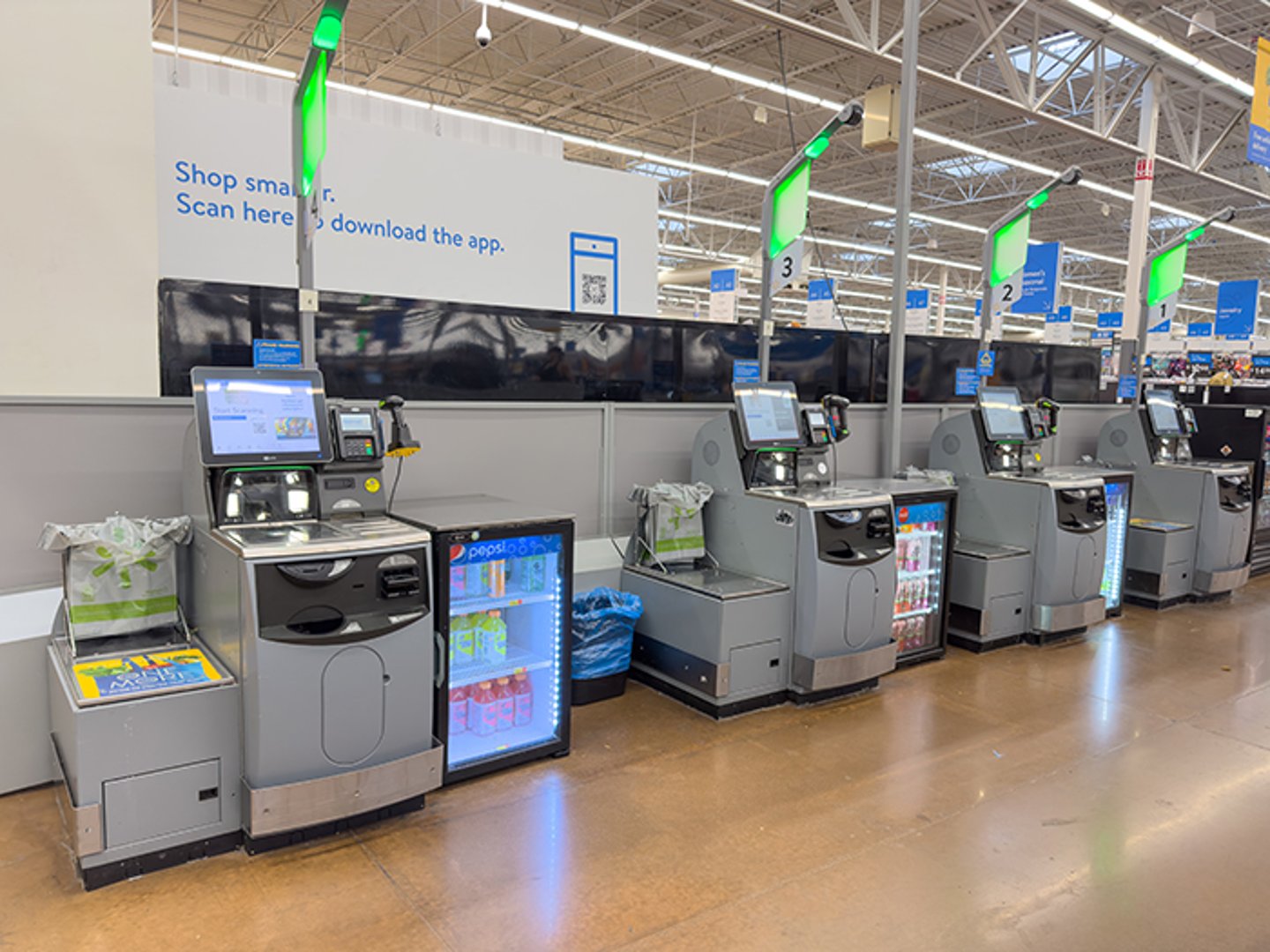
The company has stated that these decisions stem from valuable input received from both customers and dedicated employees. The goal, according to a company spokesperson, is to enhance the overall quality of service provided in these stores.
By replacing the self-checkout kiosks with traditional staffed lanes, Walmart aims to improve the shopping experience for everyone. This local control over checkout options is actually part of Walmart’s approach, as the company has noted in the past.
Store managers are given the discretion to utilize self-checkout based on what best serves their specific location. This flexibility considers several important factors, including feedback from both associates and shoppers.

Shopping patterns within a particular area also play a role in these decisions. Furthermore, the business needs unique to that location are taken into account.
This isn’t just a minor tweak; it reflects a larger trend rippling through the retail sector. It appears many retailers are taking a fresh look at their self-service options.
Target, another major player, has recently adjusted its self-checkout policies. They have limited the service to customers purchasing 10 items or fewer.
While Target denies that this move is a direct result of theft, stating it was planned and is about smooth customer flow, the context mentions their significant losses. The Minneapolis store, like others, has experienced substantial losses attributed to shoplifting.

The company reported a staggering nearly $500 million increase in shrink-related losses in 2023 compared to the prior year, according to Business Insider. Shrink is a term retailers use to encompass losses from shoplifting and inventory errors.
Industry experts, however, offer a different perspective on Target’s changes. Many believe that theft is a major underlying reason for this strategic shift away from widespread self-service.
Neil Saunders, a retail analyst at GlobalData, conveyed this view to CBS News. He highlighted that self-checkout presents an opportunity within the store where people can steal items.
Consequently, retailers like Target are scaling back on this option specifically to mitigate losses linked to theft. This expert opinion directly contrasts with Target’s stated reasons.
The challenges posed by theft are indeed significant. The National Retail Federation estimates that U.S. retailers lost an estimated $112.1 billion to shrink during 2022.
In a specific example that garnered national attention, a California woman was convicted for a dramatic case of theft at Target. She was found to have stolen over $60,000 worth of merchandise.

In a troubling incident, a woman exploited self-checkout machines during a crime spree that included 100 visits, as reported by ABC7 News. She would scan items, pay with only a small coin or bill, and then walk right out without completing the transaction.
Walmart has faced its fair share of challenges related to theft at self-checkout stations, leading to a recent incident where a woman was banned from all of Walmart’s U.S. stores due to her actions.
She faced accusations of employing a self-checkout scam. This involved shoplifting items, including packs of ramen noodles, from one of its locations.
Adding to the complexity, online marketplaces have inadvertently contributed to the problem. Platforms like eBay and Facebook Marketplace are cited as fueling the resale of stolen goods.
These online venues, alongside unregulated pawn operations, have reportedly created a booming shadow economy. This underground market thrives on and is fed by organized retail theft.
Retailers are clearly feeling the impact of this complex issue. It’s forcing them to reconsider operational choices like self-checkout.
Dollar General is another chain that has reduced its reliance on self-service. In April, the company announced plans to remove self-checkout from 300 of its stores.

Particularly, these bans were enforced at locations experiencing the highest theft rates, and now, at many of their stores, customers are restricted to five items or fewer when using self-checkout to mitigate losses.
Five Below is taking an even more drastic approach. They are phasing out self-checkout almost entirely across their locations.
Joel Anderson, the CEO of Five Below in 2024, stated during an earnings call that most stores would transition to associate-assisted checkouts. This change is particularly emphasized in stores identified as prone to theft.
Five Below is also implementing additional security measures. These include adding receipt checks, increasing staffing levels, and employing more security guards.
The perspective from store employees can shed further light on the situation. A former Walmart employee shared insights into the company’s security measures regarding self-checkout.
Running the front end of a Walmart store for 11 years, she mentioned being familiar with how the chain monitors activity at the self-service kiosks. She asserted that the store always had knowledge when someone was attempting to steal.
She described attending an annual shareholders meeting in Arkansas where Walmart employees were shown presentations. These presentations detailed the integration of artificial intelligence technology into the store’s security systems. This tech, she claimed, is incredibly advanced. She confidently stated that customers cannot outsmart it.

She recounted an incident involving a customer who brought a 50-inch TV to self-checkout. While the customer scanned the item themselves, an alert was triggered on an associate’s handheld device.
The device indicated that the shopper had scanned a 50-cent bowl instead of the television. This immediately raised red flags for the associate.
Items like televisions often prompt customers for a serial number during the self-checkout process. This is intended as an added layer of confirmation to ensure accurate scanning.
The former employee explained that associates can remotely shut down a self-checkout machine. She said that if a self-checkout machine unexpectedly shuts down while a customer is using it, it’s likely an employee has done so.
This often occurs because employees have reason to believe a patron is attempting to steal. It’s a direct intervention method linked to theft detection.
She also mentioned the difficulty of removing stickers from some items, like the 50-cent bowls. She hinted that this might be intentional, making it harder for individuals to swap price tags.
While retailers are making these operational changes, shoppers are certainly voicing their opinions. Social media platforms and online forums have become spaces for customers to express their frustrations.
Complaints about longer lines at checkout are common. Many users lament the perceived loss of convenience that self-checkout offered.
A Reddit user shared a photo showing a vacant space where self-checkout machines once stood at a local store. The user expressed shock, writing, “The Target I live near completely got rid of self-checkout.
On X, the platform formerly known as Twitter, another shopper vented frustration. They wrote, “Target is turning into Walmart. Sixteen lanes. One cashier. Mile-long line for self-checkout. Why?!”

Some customers genuinely prefer the self-service option. They appreciate the ability to scan their own items, finding it faster and more autonomous.
One Redditor clearly articulated this preference. They wrote, “That’s a shame. I hate having to go through a manned register. I prefer self-checkout every time.”
Interestingly, not all shoppers are embracing the rise of self-checkout, as some voice their frustrations about being compelled to use this method despite their preference for traditional lanes.
Moreover, customers often encounter long waits at self-service kiosks, especially when traditional checkout lines are closed or limited, highlighting the division in shopper experiences between those who appreciate self-checkout and those who dread it.
Specific complaints shared online illustrate this. A North Carolina shopper posted on X asking why there were no traditional registers open early in the morning at their Walmart, forcing them to use the self-checkout area for an entire cart. They suggested offering a discount to those using self-checkout. This highlights a perceived imbalance when forced into self-service.
A shopper at a Walmart in Glenmont, New York, expressed frustration over the closure of all traditional lanes, which forced customers to use self-checkout lines marked ’15 items or less,’ leading to significant delays for those with larger purchases.
Other online grievances included long lines at registers with no self-checkout options available, as reported from a Montgomery, Alabama Walmart. In Florida, a shopper with only three items was frustrated by the lack of an express lane or cashier.

These customer complaints underline the challenging balance retailers must navigate, as pointed out by Santiago Gallino, an associate professor at the Wharton School of the University of Pennsylvania.
Gallino emphasized that retailers must find a delicate equilibrium; having too few staffed registers can frustrate traditionalists, while over-reliance on self-checkouts can create inefficiencies and lead to revenue losses linked to theft concerns.
Gallino’s analysis points to labor cost savings as a key driver behind the continued presence of self-checkout. This is especially true in managing peak-time demand when staffing needs are high. Retailers can operate with fewer employees at peak times while still offering checkout options. This helps them balance fluctuating staffing requirements efficiently.
It’s a constant balancing act, trying to merge the speed of technology with the personal touch that defines a great store experience. The conversation about checkout convenience and security is alive and well, shaping how we interact with our favorite stores every time we shop.
Related posts:
Target among growing list of retailers dialing back self-checkout
Retail Shock: Target Reportedly Pulls Self-Checkout From All 2,000 Stores
Walmart self-checkout: How retailer’s DIY lanes don’t check out with some shoppers