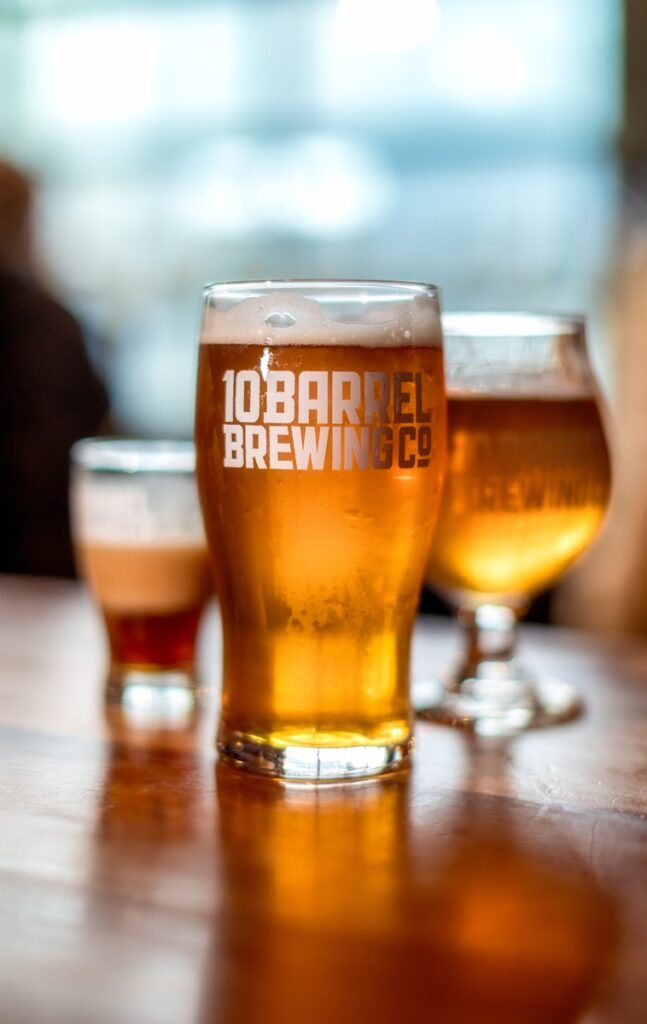
The brewing industry is experiencing a major transformation as leading companies like AB InBev and Molson Coors adjust their strategies in response to falling beer sales and changing consumer preferences. AB InBev is capitalizing on the booming demand for ready-to-drink (RTD) products, notably canned cocktails which are seeing double-digit growth, while Molson Coors takes the drastic step of closing its historic 150-year-old Leinenkugel’s brewery, illustrating the contrasting paths of diversification and consolidation that brewers must navigate in today’s market.

RTD Revolution: AB InBev’s Cocktail Strategy to Offset Beer Declines
AB InBev’s focus on ready-to-drink products reflects a view that this category is increasingly profitable. CEO Michel Doukeris highlighted on an earnings call that the “double-digit volume growth of canned cocktails like Cutwater and Nütrl” had helped offset declines in beer sales, illustrating the importance of diversification.
Addressing potential concerns about RTDs cannibalizing beer sales, Mr. Doukeris referenced Circana data during a recent earnings call. This data suggested that 75% of Cutwater and Nütrl sales were occurring alongside spirits and wine purchases, rather than displacing beer sales, indicating market expansion rather than substitution for these products.
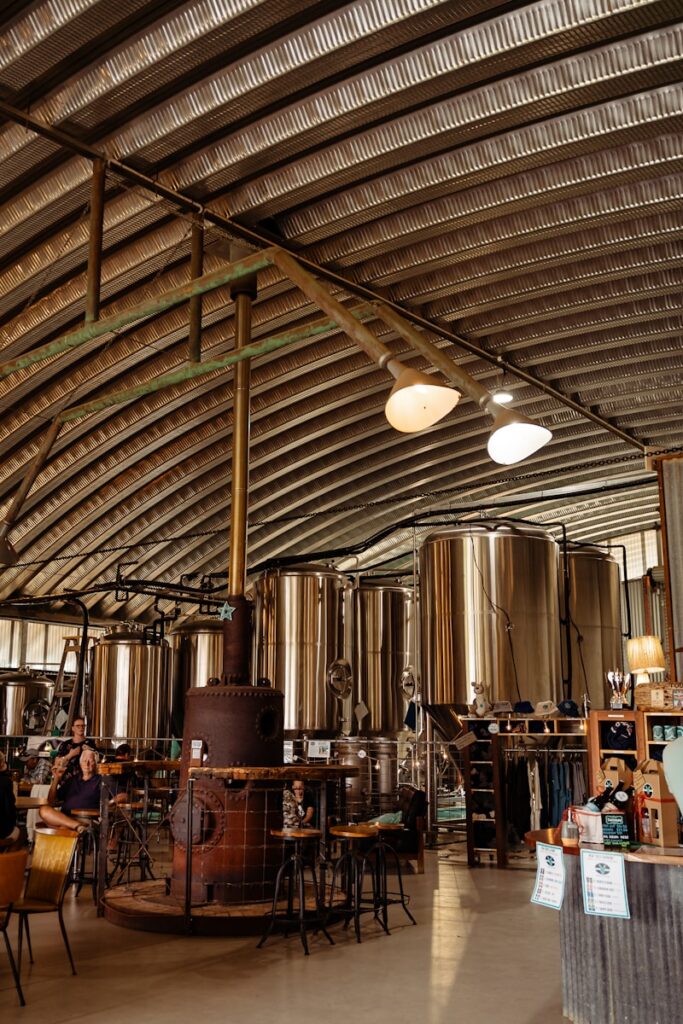
Legacy Lost? Molson Coors’ Closure of the Leinenkugel Brewery
Meanwhile, another major player in the brewing industry, Molson Coors, has also undertaken significant structural changes, including the closure of a historic brewery. The company is closing the 150-year-old Leinenkugel’s brewery located in Chippewa Falls, Wisconsin.
In November, Molson Coors announced plans to shut down the Leinenkugel’s brewery in January and consolidate operations by moving production to its Milwaukee plant, a decision that directly affects 56 workers who recently completed their last shifts at the facility.
The closure decision has reportedly been met with disappointment from the local community and even the family who founded the brewery. Brothers Jake and Dick Leinenkugel, representing the sixth generation of the family that established the brewery in 1867, have expressed a desire to buy the facility back and keep it operational.
The brothers have indicated that their proposals to repurchase the brewery have so far been ignored by Molson Coors. Dick Leinenkugel stated, “We would like to restore brewing operations at the Chippewa Falls site,” expressing hope for reconsideration from the company.
Product on Amazon: Molson Coors Light Frosty Bottle Metal Sign – Fun Coors Light Sign for Man Cave, Bar or Game Room
Brand: Open Road Brands
Binding: Kitchen Product Group: Lawn & Patio
Price: 16.99 USD
Color: Silver
Material: Metal
Theme: Food & Drink
Mounting Type: Wall Mount
Features:
1. Molson Coors Beverage Company Official product: Bring the ultimate refreshment into your home with this exciting wall decor! This unique die-cut sign is shaped like a chilled glass beer bottle, making it a standout piece for any space.
2. Material: This eye-catching sign is made of lightweight, sturdy, and weather-resistant tin. Made in USA.
3. Places to Use: Pay tribute to your favorite brew by displaying this wall decor in your man cave, bar, or game room.
4. Size: 3.81″ W X 14.35″ H X 0.125″ D
Top Review from US: “Great quality”
Shopping on Amazon >>

Family vs. Corporation: The Battle to Save Leinenkugel’s
Earlier this month, the Leinenkugel family formally requested to negotiate the purchase of the brewery back from Molson Coors, but their request was denied on January 6. They reached out again two days later to reiterate their commitment to preserving the brewery’s rich legacy, yet as of now, they have not received any response from the company.
Molson Coors has stated its intention to keep certain parts of the site open. The Leinie Lodge visitor center, gift shop, and a small pilot brewery are expected to remain operational, while the fate of the larger production facility remains unclear.
Dick Leinenkugel has expressed that should the family succeed in repurchasing the brewery, it would be run as a separate entity, potentially giving rise to a new beer brand that may or may not carry the Leinenkugel’s name, as he hinted at the exciting possibilities ahead.
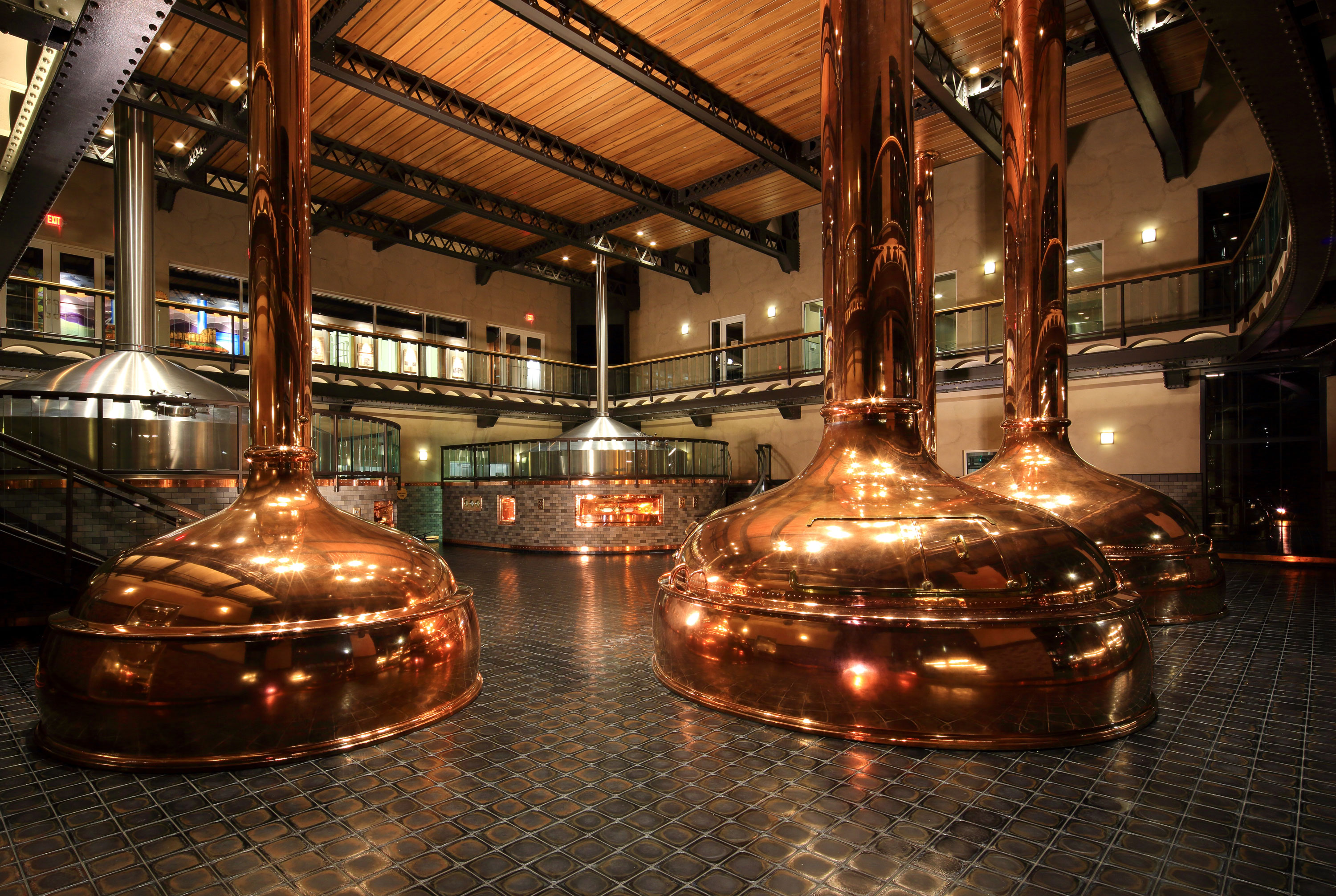
As the brewery approached its final operational day, the Leinenkugel family held onto a hopeful vision for the site’s future under their ownership, with Dick emphasizing the brewery’s significant heritage and its deep-rooted connection to the Chippewa Valley community.
Molson Coors, the second-largest brewing company in the U.S., cited shifting its beer manufacturing to its Milwaukee plant as the primary reason for the decision. The company, which also produces well-known brands like Coors Light, Miller Lite, and Carling, described the closure as a difficult but necessary choice.
The closure of the 150-year-old brewery comes amidst reports of a sharp slump in overall beer sales impacting the company. Molson Coors CEO Gavin Hattersley had previously indicated that cost-cutting efforts would be necessary to navigate the challenging market conditions.
Product on Amazon: Vintage Beer Breweries are Calling and I Must Go Craft Beer T-Shirt
Brand: Vintage Beer Breweries are Calling
Binding: Apparel Product Group: Apparel
Price: 19.99 USD
Features:
1. Vintage Beer Breweries are Calling and I Must Go Craft Beer
2. Beer Brewery is Calling and I Must Go
3. Lightweight, Classic fit, Double-needle sleeve and bottom hem
Shopping on Amazon >>

The company’s financial results reflected these difficulties, with Molson Coors reporting a 7.3 percent decline in sales during the second quarter of the previous year. The company had also implemented price increases earlier in 2024, which can sometimes impact consumer demand.
Brian Erhardt, Molson Coors’ chief supply chain officer, provided context for the decision to Food Dive. He stated, “‘While never easy, these choices are made with much thought and consideration to position Molson Coors for continued success in Wisconsin and beyond.’
Mr. Erhardt elaborated on the strategic decision-making behind the closure, stating, ‘Following the end of a large contract brewing agreement and amid an ongoing canning line investment project at our Milwaukee brewery, we’ve made the decision to close two of our smaller brewing operations in Wisconsin and centralize statewide production at our main site in Milwaukee.’ With the Chippewa Falls facility being one of those smaller operations, this change reflects a broader trend in the industry.
The challenges looming over major brewers like AB InBev and Molson Coors are part of a larger narrative within the food and beverage sector, where companies are reevaluating and reshaping their production strategies to adapt to a challenging economic landscape, characterized by persistent inflation and evolving consumer habits.
Recent examples from other sectors underscore this trend. In the last month alone, cereal giant WK Kellogg Co and beverage behemoth Keurig Dr Pepper have both announced the closures of production facilities. These actions have impacted hundreds of jobs across the respective companies, highlighting the widespread nature of the pressures.
More broadly, alcohol brands across categories have reportedly suffered as Americans have cut back on their drinking habits following the period of pandemic lockdowns. This shift in behavior has added to the demand-side challenges facing producers.
The decline in alcohol consumption is also impacting the wine sector, as Vintage Wine Estates, the 15th largest producer in the U.S., filed for bankruptcy in July, citing decreasing American consumption as a key reason. Shortly thereafter, Meier’s Winery, one of the nation’s oldest wineries and an affiliate of Vintage, also declared bankruptcy, highlighting the widespread market disruptions affecting alcohol producers.
As AB InBev and Molson Coors chart contrasting paths—one embracing RTD innovation, the other navigating historic closures—the brewing industry’s future hinges on adaptability. The survival of legacy brands and facilities now depends on balancing tradition with agility, whether through diversifying into RTDs or preserving heritage through community-led ownership. In an era of shifting consumer habits, the ability to blend innovation with respect for brewing legacy will define the industry’s next chapter.
Related posts:
AB InBev to shutter Anheuser-Busch distribution facility
Anheuser-Busch forced to close iconic St. Louis brewery after Bud Light controversy?
Canada Halts Musk’s $43M Tesla EV Rebate Claim After Rapid-Fire Sales, Bans Future Subsidies